A sample order runs us about $150 per supplier. The first production run on a recent client launch was 500 units at roughly $4,500 landed. So by the time a beginner places a real order, close to $5,000 is sitting with a factory they have never visited, in a country they have never been to, found through a website where every listing looks the same. Alibaba supplier vetting is the couple of hours of filtering that decides whether that money comes back as sellable inventory or as a pallet you cannot ship. This is the checklist we run on client launches.
01Vetting is a price decision before it is a quality decision
Most sourcing advice treats supplier vetting as a quality problem. Will they make it well? Will it arrive broken? Those questions matter, but they come second. The first thing your vetting decides is what you pay per unit, and you make that decision in the first 20 minutes without realising it.
Here is why. Roughly half the companies you find on Alibaba are not factories. They’re traders. A trader takes your order, walks it over to an actual factory, and adds their own margin on top before quoting you. They own no equipment, no production line, and no workers. They own a phone and a relationship.
That markup does not show up as a line item. It shows up as a unit price you accept because you have nothing to compare it against. On a 500 unit first order at $9 a unit landed, a trader margin of even 15% on the factory price is several hundred dollars of your launch budget gone before a single unit sells.
The second cost is worse and slower. Traders cannot customise. If you ask a factory to add a cut resistant glove to the box, print your logo on the sleeve, or change the handle material, the factory says yes or no based on their own line. The trader has to go ask, and the answer comes back slow, expensive, or vague. That matters because differentiation has to be decided before you source, not bolted on afterwards. We learned that one the hard way on a wood therapy massage tool account we ran for 12 months, where every optimisation lifted sales for a few weeks and then the price undercutting pulled them straight back down. The product was generic. No amount of good management fixes a generic product, and we wrote up the whole pattern in our guide to differentiating a saturated niche.
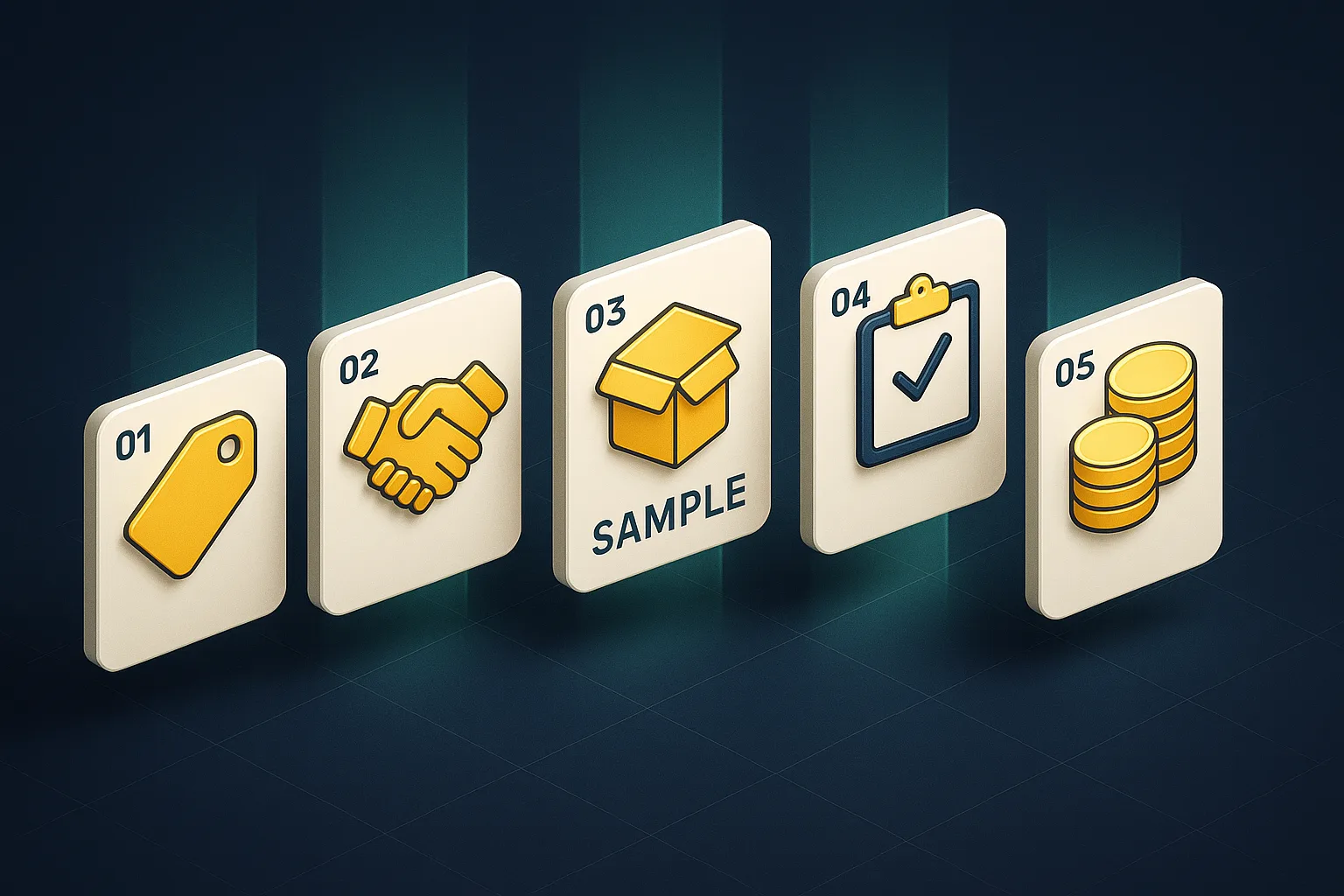
So the vetting sequence looks like this, in order of what it protects:
- Factory or trader. Decides your unit cost and whether customisation is even possible.
- Credibility signals. Rating, verification badge, and years in business. Decides whether the company exists as claimed.
- Communication behaviour. How they answer your first three messages. Decides whether the relationship survives a problem.
- Sample quality. Decides whether you order inventory at all.
- Payment structure. Decides what happens if the bulk run comes out wrong.
We currently run Amazon stores doing $200k/month for paying clients, and every one of those products came through some version of that sequence. Skip step one and the other four get more expensive.
02Where the search actually starts
Open Alibaba.com and the first thing to do is not type your product. It’s to change what you’re searching. There’s a selector next to the search bar that lets you search for suppliers rather than product listings. Set it to Manufacturer, then type your product. For a client launch we’ll use something like “power tool organizer” as the search term, meaning the plain main keyword, not a fancy variant.
What comes back looks like a shopping page and it isn’t one. Each listing you scroll past is a different company, not a different product. Ten listings that look identical are ten separate factories and traders competing for the same order. Beginners scroll this like Amazon, comparing photos and prices, and pick the cheapest looking one. That’s how you end up with a trader.
Before you contact anyone, filter on three things:
- Star rating of 4.5 or higher. That rating comes from other buyers who have actually placed orders. Below 4.5 there’s usually a reason, and you’ll find it during your production run instead of before it.
- The Verified Supplier badge. This means Alibaba has independently checked that the company is a real, operating business. It’s not a quality guarantee. It’s an existence guarantee, and it removes a whole category of problems.
- At least two years in business. New companies are not automatically bad, but a first time seller does not have the budget to absorb a first time factory. Two years means they have survived at least one full order cycle with somebody else’s money.
There’s a fourth filter on the results page worth clicking straight away, which is Verified Manufacturers. That single toggle clears out a lot of the noise before you start reading profiles.
None of these three filters proves the company is a factory. They only prove the company is real and has a track record. The factory question gets settled in section 04, and it’s the one you should spend the most time on.
03Message 5 to 10 suppliers, not 1
Once you have a filtered list, build a contact list of five to ten manufacturers who all clear your standards, and message every one of them. Not one. Not two. Five to ten.
Beginners hate this because it feels like wasted effort. It isn’t. You are not shopping for a product, you’re running an audition, and the audition has three purposes. You need a price range so you know what normal looks like. You need to see who replies fast and who disappears for four days. And you need enough options that walking away from a bad one costs you nothing emotionally.
Half of your list will fall out on their own within a few messages, and that’s the process working. Their minimum order quantity will be too high for a first run. They’ll want too much for custom packaging or private labelling. Their price or their shipping estimate will land outside your budget. Every one of those is useful information, delivered free, before you have committed anything.
Your first message should get four answers in one go:
- Unit price at your target quantity, and specifically the EXW price. More on why that word matters in section 06.
- Minimum order quantity, and whether they’ll flex it for a first run.
- Whether they can do your customisation, stated concretely. Custom packaging, a logo, a bundled accessory, a material change.
- Production lead time from deposit to goods ready.
That fourth one gets skipped constantly and it’s the one that wrecks launch timing. A 45 day lead time on top of sea freight means your inventory arrives a full quarter after you paid for it.
On customisation, be specific in the first message rather than asking whether they can “customise”. Ask whether they can add the exact item you want. On one client launch in sports and fitness, the differentiation was a hand band, a wrist band, a resistance band, and a small carry bag bundled with the core product, with all four items visible in the main listing image. That product held first page rank from launch at a 20% price premium over the category average, with month one advertising cost of sale at 25% and total advertising cost of sale at 13%. That bundle was a sourcing conversation, not a marketing one. It had to be agreed with the factory before anything was made.
One constraint to hand the supplier along with the request: whatever you add cannot push the packed product into a higher FBA size tier. A bundle that wins the click and then eats the margin in fulfilment fees has not helped you.
04Factory or middleman: the two clues that settle it
Open the company profiles from your shortlist one at a time and read them properly. Two things on that page settle the factory question faster than anything you can ask over chat, because a trader can tell you they’re a factory and they will.
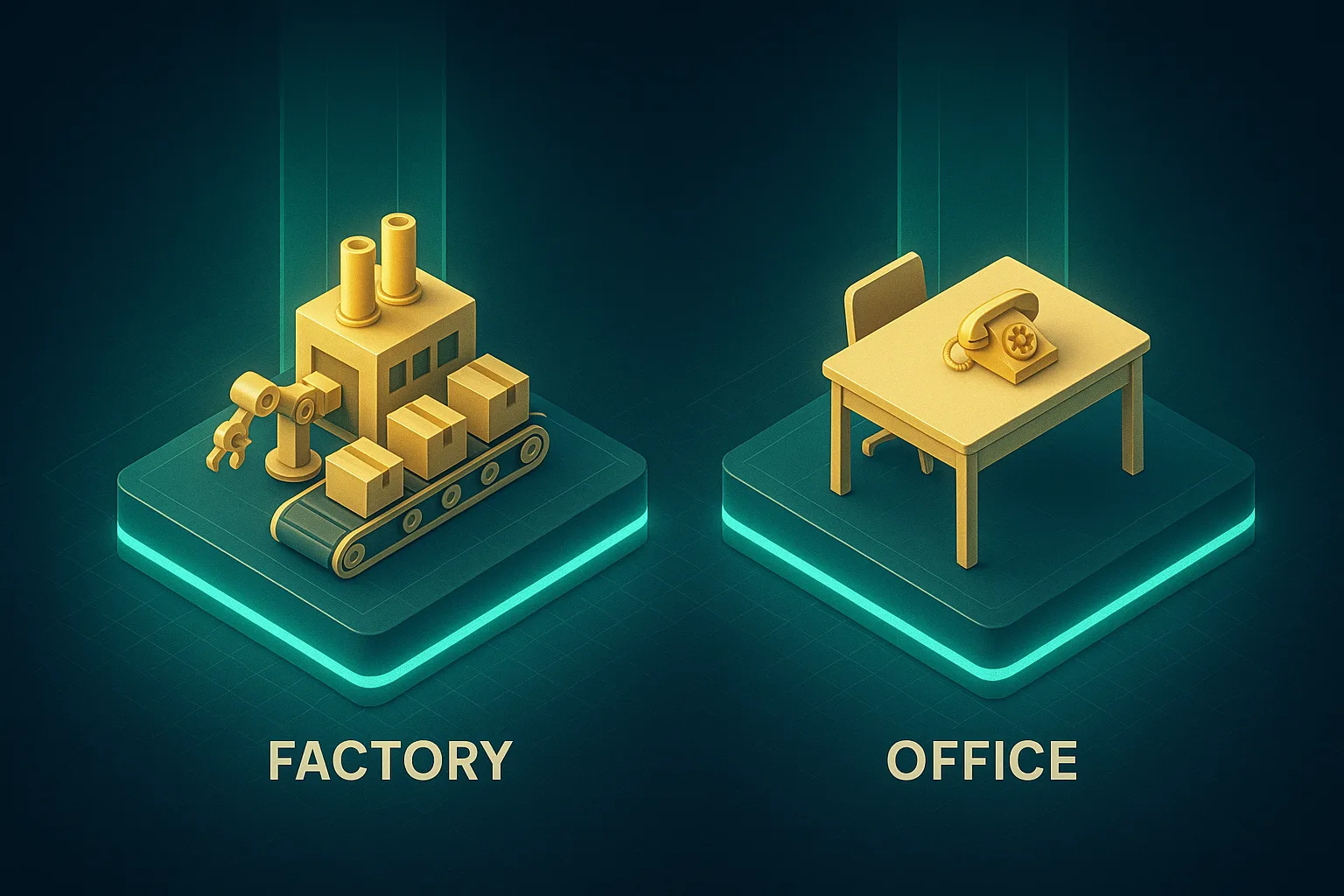
Clue one is the Main Products list. Every company profile has one. If the main products are all cousins of each other, so for a power tool organizer you’d see tool organizers, garage organizers, and pegboard storage, that’s a specialised factory. They make one category of thing and they’ve built a line around it. That’s what a real manufacturer looks like.
If the main products list reads like a department store, so tool organizers next to phone cases next to kitchen mats, that’s a sourcing agent with a catalogue. They’re not making any of it.
Clue two is the company video. A real factory is proud of the building. Their profile video shows the equipment, the assembly line, and workers actually producing something. A trader’s video, when they have one, shows a nice office or a showroom full of finished products they bought from somebody else.
That’s the whole test, and it takes about 90 seconds per profile. It’s also why the vetting has to happen on the profile page rather than in chat. Chat is where people tell you things. The profile is where they show you things.
You can still message a suspected trader for a comparison quote. That’s genuinely useful, because their price gives you a ceiling. Just know what you’re looking at when the number comes back.
The baseline check most people skip. Alibaba prices are quoted to foreign buyers, and there’s usually some padding in them. 1688.com is the Chinese domestic version of the same marketplace, and Chinese buyers pay noticeably less on it. You cannot buy from 1688 as a foreign seller, and that’s fine, because you’re not trying to. You’re trying to find out whether the Alibaba quotes you’ve collected are near the real manufacturing cost or well above it.
The process takes about 10 minutes:
- Note the general Alibaba price range for your product. On the power tool organizer example, that came out around $12 to $18.
- Translate your main keyword into Chinese. Google “English to Chinese”, paste the keyword in, copy the Chinese output.
- Open 1688.com in Chrome so it auto translates the page, click “Looking for a Factory” above the search bar, and paste the Chinese keyword.
- Open a relevant supplier, find the matching product, and read the price in yuan.
- Convert it. In that example the listing showed ¥103.00, which came out around $14.47.
Alibaba at $12 to $18 against a domestic price of $14.47 means the quotes are honest. If the domestic price had come back at $3 against a $10 Alibaba quote, that gap is the actual finding, and it tells you to keep negotiating or keep looking. Treat this as a sanity check rather than a target. You are not going to get the 1688 price, and chasing it wastes time you should spend on samples.
05The green flag and red flag checklist
Ordering from a factory 6,000 miles away always carries risk. There’s no method that removes it. What a checklist does is move most of the risk into the part of the process where it costs you a few emails instead of a few thousand dollars.
By the time you’ve traded three or four messages with each supplier, you’ll have enough behaviour to sort them. These are the green flags, and they all point at the same thing, which is a supplier who wants a repeat customer rather than one order:
- They offer proof without being pushed. A video call walking through the factory floor and the production line, offered rather than extracted.
- They send in production photos while your order is being made, and they’re specific about materials rather than vague.
- They take sample feedback. You tell them the handle is too thin, and they revise the sample instead of explaining why it’s fine.
- They accept a third party inspection and staged payments without a fight, so 30% upfront and 70% after the inspection passes.
- They suggest improvements you didn’t ask for. A cheaper material that performs the same, a packing change that cuts shipping weight, a design tweak that reduces breakage. This one is rare and it’s the strongest signal on the list.
The red flags are the mirror image, and any one of them is enough to move on while you still have four other suppliers in the conversation:
- Slow or evasive replies. Long response times, vague answers about the product, or a refusal to get on a video call. If they don’t care about your business now, they’ll care less once they hold your deposit.
- They want 100% upfront and won’t discuss staged payments or a pre shipment inspection.
- They won’t specify materials. Not “high quality plastic”. The actual material.
- The sample is bad. This is the one people talk themselves out of. The sample is the supplier’s first impression, made with full knowledge that you’re judging it. If they don’t care about that unit, they will not care about unit 400.
- They won’t take responsibility. Defects come back from inspection and they argue rather than fix.
- The story keeps changing. One well communicated delay is normal manufacturing. A new excuse at every stage is a pattern, and the pattern continues after your money is gone.
There’s one more green flag we’ve come to rely on that most vetting lists miss, and it pays off months later. Ask whether the supplier will print your brand on real packaging during the production run and email you photographs of it from each side, held in hand. A good factory says yes without thinking about it. Those exact photos are what Amazon wants for Brand Registry and for a GTIN exemption, and Amazon rejects software mockups and AI renders for both. We build that request into the manufacturing window on every client launch, and it has been accepted on every filing we’ve run. The full process is in our Brand Registry walkthrough.
06From 10 suppliers down to 1
At this point you have maybe four or five suppliers still standing. The goal now is to get to two or three on price, then let samples pick the winner on quality. Price first, quality second, and in that order deliberately, because comparing quality across five samples is expensive and comparing prices across five quotes is free.
Ask for the EXW price. This is the single highest value sentence in this post. EXW stands for Ex Works, and it means the raw price of the product sitting at the factory door with no shipping included. Ask for FOB or DDP instead and you’ll get a higher number, because manufacturers routinely add their own margin to the freight portion. The shipping is where the padding hides.
The better sequence is to get the EXW price from the factory, then arrange your own freight to collect from the factory and deliver DDP to Amazon. On the vegetable chopper launch, that first production order came out at $4,500 for 500 units landed DDP, which is $9 a unit with duty and delivery already inside the number. We move client freight through our own shipping company, Freightklan, which is why we can hold that line item to a fixed quote instead of a surprise at the port. Get quotes from your manufacturer too, purely as a comparison. Just don’t accept the bundled number as though it’s the product price.
Negotiate, because the first price is not the price. Most manufacturers have room and expect you to ask. What moves them is not haggling, it’s the prospect of repeat orders. The line that works:
I am looking for a long term manufacturing partner for this product. This is a first test run order. If it goes well, I plan to place many more orders.
That’s true for you, and it reframes a small first order from a low value transaction into the start of something. Suppliers price accordingly.
Then order samples. Two ways to run this, and the right one depends on whether you’d rather spend money or time:
- Photo ready, one round. Order a fully custom sample from all three finalists at once, with your logo, your packaging, and your modifications. Fastest route, and the winning sample doubles as your photography subject immediately. It’s also the expensive option, because you’re paying for full customisation three times to use one.
- Quality first, two rounds. Order plain unbranded samples from all three, pick the best build, then order one custom sample from the winner only. Cheaper, and it has a timing advantage people miss. Your custom sample gets photographed and your listing gets built while the bulk order is still in production, so your listing assets are ready when the inventory lands.
We ship samples to Pakistan rather than the US, because Pakistan is closer to China. Samples land in about a week and the per sample shipping is meaningfully cheaper, so we handle them in person before anyone commits to a production order. Budget around $150 per supplier for this stage.
Structure the payment so quality still matters after you’ve paid. The industry standard deposit is 30% to 50%. Aim for 30, accept 50, and never pay 100% upfront. Once production finishes, hire a third party inspector to visit the factory, check the goods against your approved sample, and send you a photo report. Inspection services start around $160 depending on your order quantity, and our team runs them for clients and students. If the report passes, release the balance. If it fails, hold the balance and use the report to get the defects fixed. That final payment is the only pressure you have left once the goods exist, so don’t hand it over early.
Two rules that sit underneath all of this:
- Keep every conversation on Alibaba. Not WhatsApp, not WeChat, not private email. Alibaba’s claims team can only act on what they can read on their own platform, and moving off it quietly removes your dispute options.
- Pay by credit card through Alibaba, and use Trade Assurance. The card fee is real and so is the second layer of protection. If Alibaba denies your claim, you can still dispute with your bank. A wire transfer has no second layer. Once it’s sent, it’s sent. Wires are fine later, once you and the supplier have a history.
The approved sample becomes the standard the bulk run is measured against. Keep it. Photograph it. Reference it by name in your messages. Everything after this point is a comparison against that one unit.
07When to run this yourself and when to hand it over
If you’re launching your first product, run this yourself. All of it. The two hours you spend reading company profiles and the three weeks you spend messaging suppliers teach you what a good factory sounds like, and you cannot buy that pattern recognition later.
Where it stops making sense is the second and third product, when your time is worth more than the process costs. Sourcing runs long and quiet. You are managing five conversations across a 12 hour time difference, chasing sample revisions, comparing quotes that are not quoted on the same terms, and none of that work compounds after the first time you’ve done it. Our clients hand us that whole block, from supplier shortlist through sample review, inspection, and freight, and get back a vetted factory with a locked price and a landed cost. If you want to talk through where your launch actually sits, book a discovery call and we’ll tell you honestly whether you need help yet.
One thing worth saying plainly: none of this fixes a bad product choice. A perfect factory making a generic product at a great price is still a generic product, and it will lose on price within a year. Sourcing is downstream of research. If the niche work hasn’t been done properly, get that right first, and our 9-step product validation process is the exact sequence we run before any supplier gets messaged.
Frequently Asked Questions
How do I do Alibaba supplier vetting without ordering samples?
You can’t finish it without samples, and you shouldn’t try. Profile checks, the Main Products test, the video check, and a 1688 price comparison get you from 10 suppliers down to 3. Only a physical sample tells you what the product actually feels like in a customer’s hands, and a bad sample is the cheapest failure available to you.
Are Verified Suppliers on Alibaba actually safe?
The Verified Supplier badge means Alibaba independently confirmed the company is a real, operating business. It does not mean they make good products, hold to deadlines, or handle a defect fairly. Treat it as a filter that removes fake companies, then do the rest of the vetting on top of it.
What is the difference between a manufacturer and a trader on Alibaba?
A manufacturer owns the factory, the equipment, and the workers. A trader takes your order to somebody else’s factory and adds a margin. Manufacturers are cheaper and can actually customise your product. Traders are more expensive and slower on any modification, because they don’t control the line.
How many Alibaba suppliers should I contact before ordering?
Five to ten. Fewer than five and you have no price range to judge against, so you’ll accept whatever the first quote says. Expect roughly half to fall out over minimum order quantity, customisation limits, or shipping cost, which is the filter doing its job.
How much should I pay upfront to a Chinese manufacturer?
Between 30% and 50% as a deposit, aiming for 30%. Never 100%. Release the balance only after a third party inspection confirms the bulk run matches your approved sample. Once you’ve paid in full, you have nothing left to negotiate with.
Is it safe to pay an Alibaba supplier by wire transfer?
Not on a first order. A wire is gone the moment it sends and there’s no dispute route. Pay by credit card through Alibaba with Trade Assurance, so you have Alibaba’s claims process and your bank as a second option. Wires become reasonable once you and the supplier have a track record together.
The Bottom Line
Alibaba supplier vetting is not a quality inspection. It’s a filter you run before your money moves, and most of its value comes from two decisions made early. Are you talking to a factory or a middleman, and did you contact enough companies to know what a fair price looks like. Get those right and the rest of the process gets easier, because you’re choosing between good options instead of hoping about one.
The order that has worked across 47 client onboardings since 2022: filter on rating, verification, and years in business, contact 5 to 10, read the Main Products list and the factory video, shortlist on EXW price, decide on samples, pay 30% down, inspect, then release the balance. Nothing there is clever. It’s just done in the right sequence, every time, before anyone spends $4,500 on 500 units of something they’ve only seen in photographs.